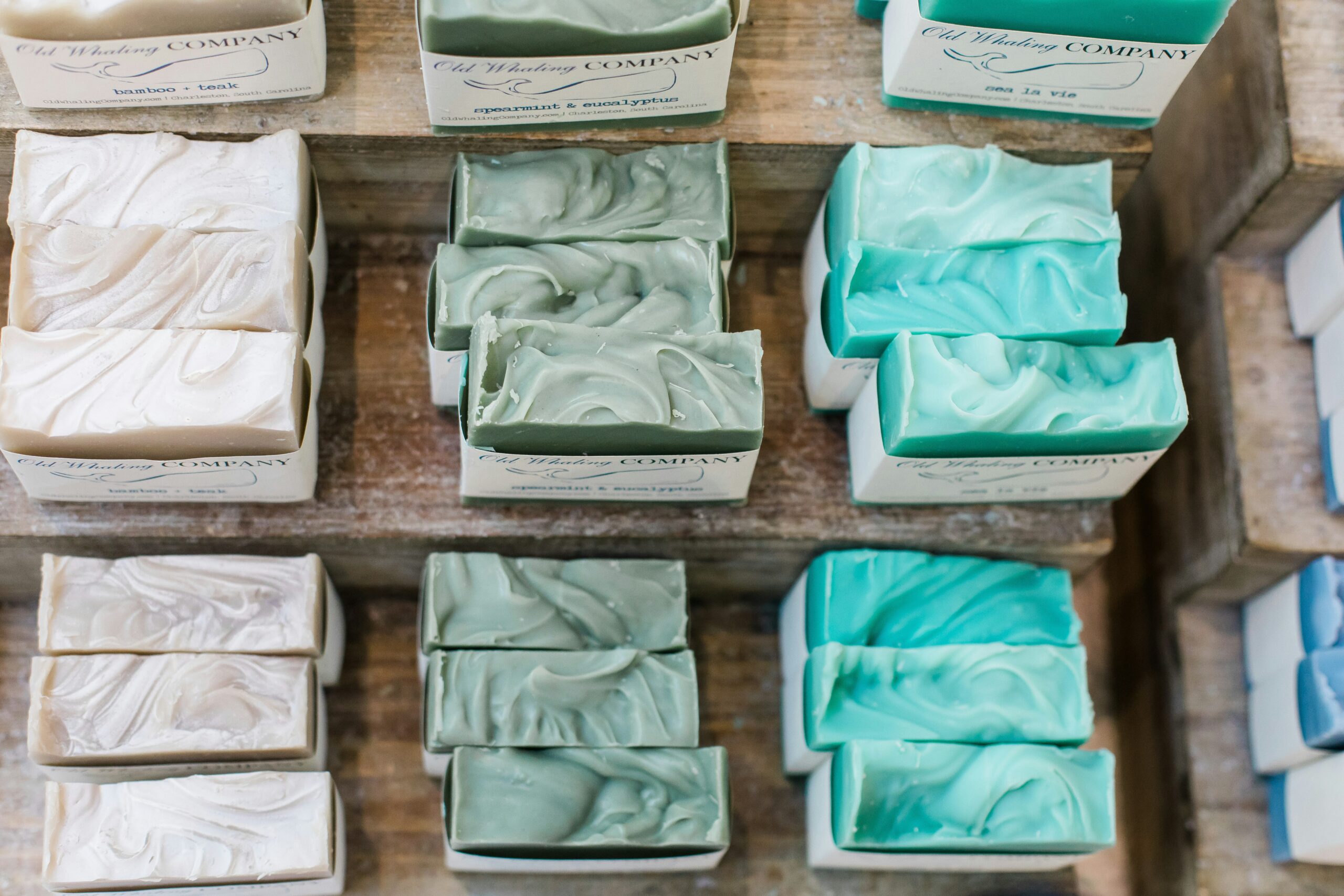
Making soap is a process that can be done with many common household products as you will find in this post. I will share a diy soap recipe you can try today to learn how to make handmade soap with the stuff you have.

Why make your own soap?
Soap making is a fun, rewarding activity that can be learned and done easily with the whole family. You can learn how to make bar soap with stuff you have at home. And it might surprise you what ingredients go into making soap. Check out the diy soap recipe I have listed below.

How they make soap in the old days
The first time I made bar soap I realized how common the ingredients were for making soap. This makes total sense thinking back on the invention of homemade soap. People did not have access to the comforts we do today. When people made soap for normal daily use and not for a hobby. They only had certain types of ingredients to use. Most people made soap using animal fat like beef tallow and lard from their own animals.
Saponification is a chemical reaction
The other active ingredient to making handmade soap is the use of lye otherwise known as caustic soda to turn the oil or fat into bar soap. This is saponification. Previously,wood ash was the older method of making lye for soap.

What to look for when sourcing supplies
You might be thinking you don’t have lye just sitting around, but I bet there’s a chance you do. And, if not, you can get some very easily. Lye is just drain clog cleaner. I buy it in the powder form and make sure it says 100% lye on the bottle. If it contains other ingredients then it’s not safe to use. So, you can see that it isn’t that hard to make handmade soap from stuff you have on hand.

Safety first
Here is a list of items that you will want to have on hand to make your own bar soap using this diy soap recipe. Using proper safety measures is necessary to prevent skin burns and irritation, but this is not hard to do safely and it’s still something I did with my kids. Educating them is important so they understand to respect the process. I feel this is good for fostering caution and respect.

The list of supplies
I will include links to products I use, these are affiliate links which just means I will earn a small commission if you click the link and purchase after you click. This does not cost you extra. Thank you in advance for purchases made through my links! )

Supplies you will need
- Safety glasses or goggles https://amzlink.to/az0507f3cXq7h #ad
- Gloves https://amzlink.to/az0YwB5i0oJd3 #ad
- Digital food scale https://amzlink.to/az0tqk5werm4u #ad or a cheap one, but look for one with two numbers past the decimal
- Thermometer or heat gun https://amzlink.to/az09rdUjNwlzd #ad
- 2 heat resistant bowls ( plastic ) https://amzlink.to/az07DZpFzM1rO #ad
- Lye or sodium hydroxide https://amzlink.to/az0xM6bXYlDPx https://amzlink.to/az0nDocIZ4scq #ad
- Coconut oil https://amzlink.to/az0q0wEJGFr0N #ad
- Olive oil https://amzlink.to/az0DPAmTDfkQI #ad
- Fragrance oil or essential oil https://amzlink.to/az0RlCPMYropD
- Distilled water ( just get this at the grocery store in a gallon jug)
- Soap mold https://amzlink.to/az0Q8JjxZyK8b #ad
- Stick blender https://amzlink.to/az0KpreinBFmL #ad
- Mica or soap coloring https://amzlink.to/az02Y0pCEACA5 #ad
- Towel ( any old towel)
- Sturdy pan or tray (this is just to sit the soap mold on for the occasional volcano effect. It’s harmless!)
- Cardboard ( just cut a box down to make a piece that fits a little larger than the top of the soap mold) or a wood plank
- Something heat resistant to cook the soap. I have use an old crock pot, stainless pot, large heavy plastic bowl. No aluminum pans or foil ( these are reactive to the process and not in a good way).

Soap making method
I am going to guide you using the crockpot method. It’s a slower process that allows you to learn the basic proces. I would encourage you to watch a few youtube videos too. Other methods include microwaving, stovetop, crockpot, Hot process, cold process, and High temp fluid hot process. Use lower temp processes to allow more time to make swirls and designs. The hotter the process the faster it goes and sometimes leaving no time for adding colors, swirls, or designs.

Starting the process
- Firstly, set your crockpot on high and add the oils (recipe below), You can add them all at one time and let them melt completely. While you are waiting for the oils to heat and melt.
- Secondly, mix the lye/water mixture.

- I add the lye to room temp water in a well ventilated area and keep a distance and open a window because the fumes are strong at first. I,usually, pour the lye slowly down the handle of a silicone spatula and gently stir to dissolve completely. This will heat up quickly once added to nearly 200 degrees fahrenheit

What temperature to use
- Basically, you will want to let it cool down and let the oils heat up. Albeit, temperature is not as important as the difference between the two, but try to make sure your oil and lye mixture are no more the 10 degrees difference when you mix them.

When and how to add the Lye
- Whenever the temps are both close enough add the lye water to the oils slowly i.e. to avoid splashing and gently incorporate with spoon or spatula. Generally, I try to soap at around 100 degrees-110 degrees, but it can be lower or higher slightly, ( turn off the crockpot at this point) Add the lye water to the oils slowly to avoid splashing and stir with the spatula gently. Eventually, this will start to incorporate and look creamy.

How to mix the soap batter
- You can use just a wisk for the next part, but your arm will hate you for it. However, I use a stick blender to mix it. Generally, this really speeds up the process. Just be sure to place the stick blender straight down into the mixture and sit it on the bottom when mixing.

How to know when soap is ready to pour
- Then, stir it between pulses until it thickens to trace. This is the point where the lye water and oils have completely combined and can be tricky to recognize. Just look up trace to see how to tell, but it should look thicker and when you drizzle the spatula in the soap it will leave a slight trail.

When the soap is at trace you can add colors, fragrance and other additives when you are ready to advance. Just know that some colors and fragrance can make the soap set up or seize quickly and make pouring into molds a challenge.

Any fragrance with vanillin can turn soap brown. This doesn’t render the soap useless, just not always a desireable color for soap. You can still use it or shred it and use it for adding in texture to lots of soap making projects.

You will just stir the fragrance in right before pouring. I will recommend that you do your first batch small and unscented. This will help you understand if the fragrance or colorants are disturbing the usual behavior of the soap.
/
Diy Soap Recipe
Ingredients (Yields ~1 kg of Soap)
- 450 g coconut oil (cleansing, bubbly lather)
- 450 g olive oil (gentle, moisturizing)
- 133 g sodium hydroxide (lye)
- 297 g distilled water
- 25 ml fragrance oil (adjust to supplier’s usage rate)
- 1 tsp mica powder (pre-mix with 1 tsp oil for even color)
Pouring the soap
- Finally, pour your soap batter into the mold and gently tap the mold as you pour to level and get the air bubbles out. I, also, use a skewer to run back and forth in the batter to remove air bubbles and end by making a full swipe around the perimeter of the mold.

Cover the mold
- Cover the mold with a piece of cardboard or slab of wood and wrap with a towel to hold in the heat that will help saponify the soap quicker. With this diy soap recipe, the soap will harder pretty quickly in most cases, but it depends on humidity, temp, and other factors from your environment. Here’s another example of how to make handmade soap with stuff you have-make your own molds with corregated vinyl boards you can buy at Wal-mart. I’ll make a video tutorial for that soon.

Just wait for the soap
- Wait 24 hours before attempting to remove the mold. It should not feel squishy when removing, but it might not be extremely hard. Just take it ouw of the mold as soon as you feel the soap it not getting marred up from the process. If you wait too long it can be difficult to cut the soap.

Cut the soap
- Cut the soap with wire or a soap cutter. I, often, just use a kitchen knife. Wipe the blade or wire after each cut to keep the cut clean and sharp. If the soap is very hard it will not cut easily, especially, if you let it dry too much before the cut.

And, there you have it. Your very own bars of soap that you can scent or design as gifts or for personal use any way that you want. It’s best to wait to use this for at least 3-4 weeks. Some say longer to help the water evaporate from the soap and makes the bar last longer. This is a debate that has many opinions. I tend to just do whatever I want here and not worry about the opinions of others on this. I have never had soap irritate my skin or cause burns for not waiting for the saponification process to finish over the following weeks.

Thanks for checking out my handmade soap recipe and blog about how to make handmade soap with stuff you have and I hope you gained some value from this material. I hope you will follow my Youtube channel here for other craft ideas and continue visiting my blog for ideas and tutorials. Below is a link to another blog post about crafting.
/
I will be sharing many ways to make diy soap from the methods to tools and additives in my future blog post and youtube content. Thanks again and Happy soaping!
~Andilynn Crafting Junkie

As an Amazon Associate I may earn from qualifying purchases made through the links you click on this post. Thanks as always! https://craftingjunkie.com/disclaimer/